
Why Web Apps are Replacing Desktop Software
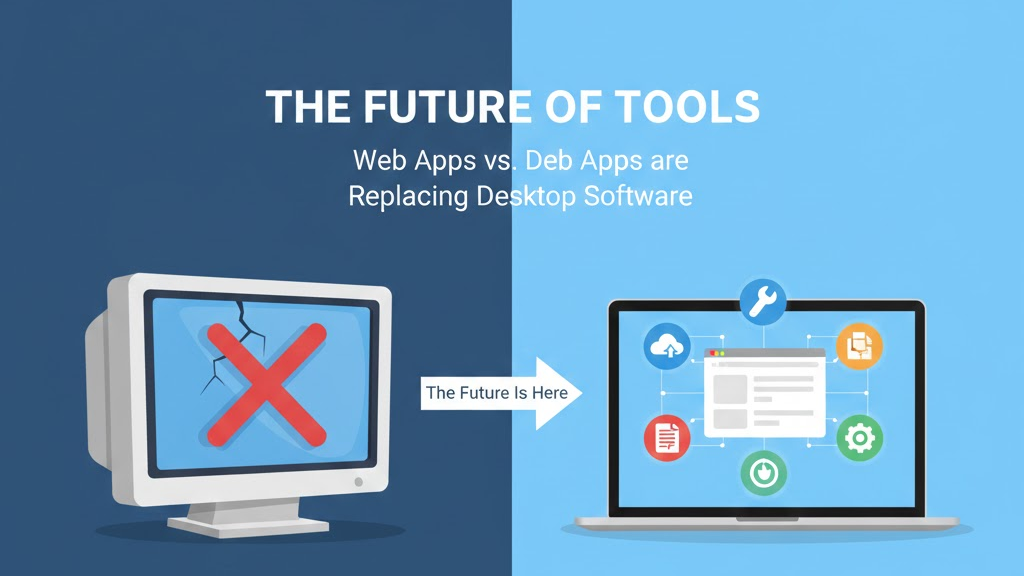
Remember the days when every essential task, from editing a document to converting a file, required a hefty software installation? Those days are rapidly becoming a relic of the past. Today, the digital landscape is dominated by browser-based tools and web applications that offer convenience, accessibility, and a surprising level of power. For users of anytool.site, this shift isn’t just a trend; it’s a fundamental change in how we work, learn, and create.
The Great Migration: From Hard Drive to Cloud
The transition from desktop software to web apps hasn’t happened overnight. It’s a gradual evolution driven by several key factors:
- Ubiquitous Internet Access: With reliable broadband and mobile data virtually everywhere, the internet is no longer a luxury but an infrastructure.
- Increased Computing Power: Modern web browsers are incredibly sophisticated, capable of running complex applications that once demanded dedicated software.
- The Rise of Cloud Storage: Services like Google Drive, Dropbox, and OneDrive have made it commonplace to store files online, making web-based editing and processing seamless.
This migration means your files and tools are no longer tied to a single machine. Whether you’re on your laptop, a public computer, or your smartphone, your workflow remains consistent and accessible.
The Advantages of Living in the Browser
A. Accessibility: Your Office is Everywhere
Perhaps the most compelling benefit of browser-based tools is unparalleled accessibility.
- Device Agnostic: It doesn’t matter if you’re on Windows, macOS, Linux, Chrome OS, or a tablet. If it has a modern web browser, you can use the tool.
- Location Independent: Working from home, a coffee shop, or a co-working space? As long as you have an internet connection, your tools are just a click away.
- Collaboration: Many web apps are built for real-time collaboration, allowing multiple users to work on the same document or project simultaneously.
B. No Installations, No Updates, No Headaches
Desktop software often comes with the burden of installation files, system requirements, and constant updates. Web apps sidestep all of these issues.
- Instant Access: Simply navigate to the website, and the tool is ready to use. No downloads, no setup wizards, no reboots.
- Always Up-to-Date: Developers push updates directly to the web app, meaning you’re always using the latest version with new features and security patches, without lifting a finger.
- Minimal System Resources: While complex web apps can consume RAM, they generally don’t clog up your hard drive or require the same processing power as a full desktop suite.
C. Enhanced Security in the Modern Browser (Mostly!)
The perception that web-based tools are inherently less secure than desktop software is largely outdated. Modern browsers are built with robust security features, including sandboxing, which isolates web processes to prevent malicious code from affecting your entire system.
Furthermore, reputable web tool providers (like anytool.site) invest heavily in encryption and privacy protocols. For instance, temporary file processing means your uploaded data is handled securely and then promptly deleted from servers after conversion. This often provides a higher level of privacy for one-off tasks than software installed on a potentially vulnerable local machine.
The Future is “Micro-Tools”
The rise of browser-based tools also heralds the era of “micro-tools” – highly specialized applications designed to do one thing exceptionally well. Instead of an all-in-one suite that might overwhelm you with features you never use, you can pick and choose the exact tool you need for the task at hand.
Need to convert a PDF to Word? There’s a web tool for that. Need to compress an image without losing quality? There’s a web tool for that too. This modular approach empowers users to build their perfect digital workflow, piece by piece.
At anytool.site, we understand that convenience and efficiency are paramount. Our platform is designed from the ground up to embody the advantages of browser-based tools: instant access, zero installation, and a focus on getting your tasks done quickly and securely.
As technology continues to evolve, the browser will only become a more powerful and central hub for our digital lives. By embracing web applications, you’re not just choosing a convenient option; you’re choosing the future of productivity and digital freedom.